
Fluid Bed Dip Coating: Nylon, Polyethylene and Epoxy
Fusion Coatings, Inc. is an ISO 9001:2015 coating job shop in Robesonia, Pennsylvania, incorporated in 1969. We fluid bed dip coat metal parts in nylon, polyethylene and thick-film epoxy, to your print and spec. Nylon is the core of our work: we are an Arkema-approved Rilsan applicator for fluid bed dip, electrostatic (ES) spray and Minicoat. There is no minimum order, lead time is about 2 weeks, and we serve customers across the US and Canada.
What is fluid bed dip coating?
Fluid bed dip coating, also called fluidized bed coating, puts a thick, even plastic film on a metal part. Air is blown up through a tank of coating powder until the powder moves like a liquid. We preheat the part in an oven hot enough to melt the powder, then dip it into the fluidized bed. The powder melts on the hot metal and forms a continuous coating.
Fluid bed builds a heavier film than electrostatic spray. That is why it is specified for functional work: slip, sound dampening, corrosion and chemical resistance, and electrical insulation.
Fluidized bed nylon coating
Rilsan nylon 11 (Arkema) is the coating we apply most. We also apply Interpon and Duralon nylon 11 and VESTOSINT nylon 12. A nylon-coated part is slippery, which reduces friction and removes metal-to-metal noise. Our nylon coatings provide salt spray resistance of up to 2,000 hours depending on thickness.
How fluid bed compares with ES spray and Minicoat:
Fluid bed dip: .008" to .020" (0.2 to 0.5 mm). Up to 75 lbs.
Electrostatic (ES) spray: .004" to .006" (0.1 to 0.15 mm). Up to 5 ft.
Minicoat: Small parts, hook-free, no contact marks. Largest part 9 x 4 x 2 inches.
The design engineer sets the thickness on the print, and we coat to it. For materials, processes and nylon specifications, see Nylon Coating Services and the Nylon Coating FAQ.
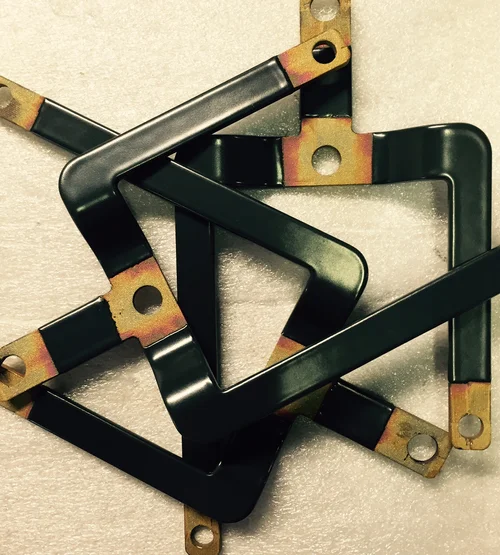
Polyethylene dip coating
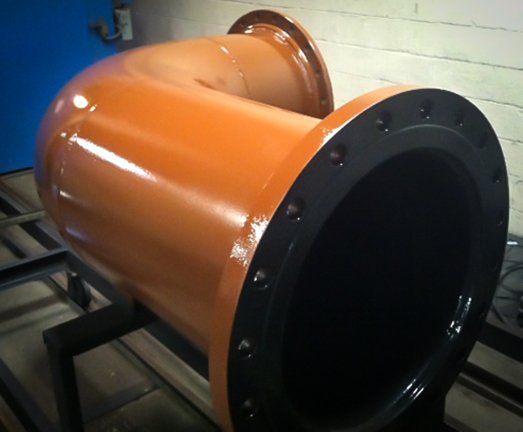
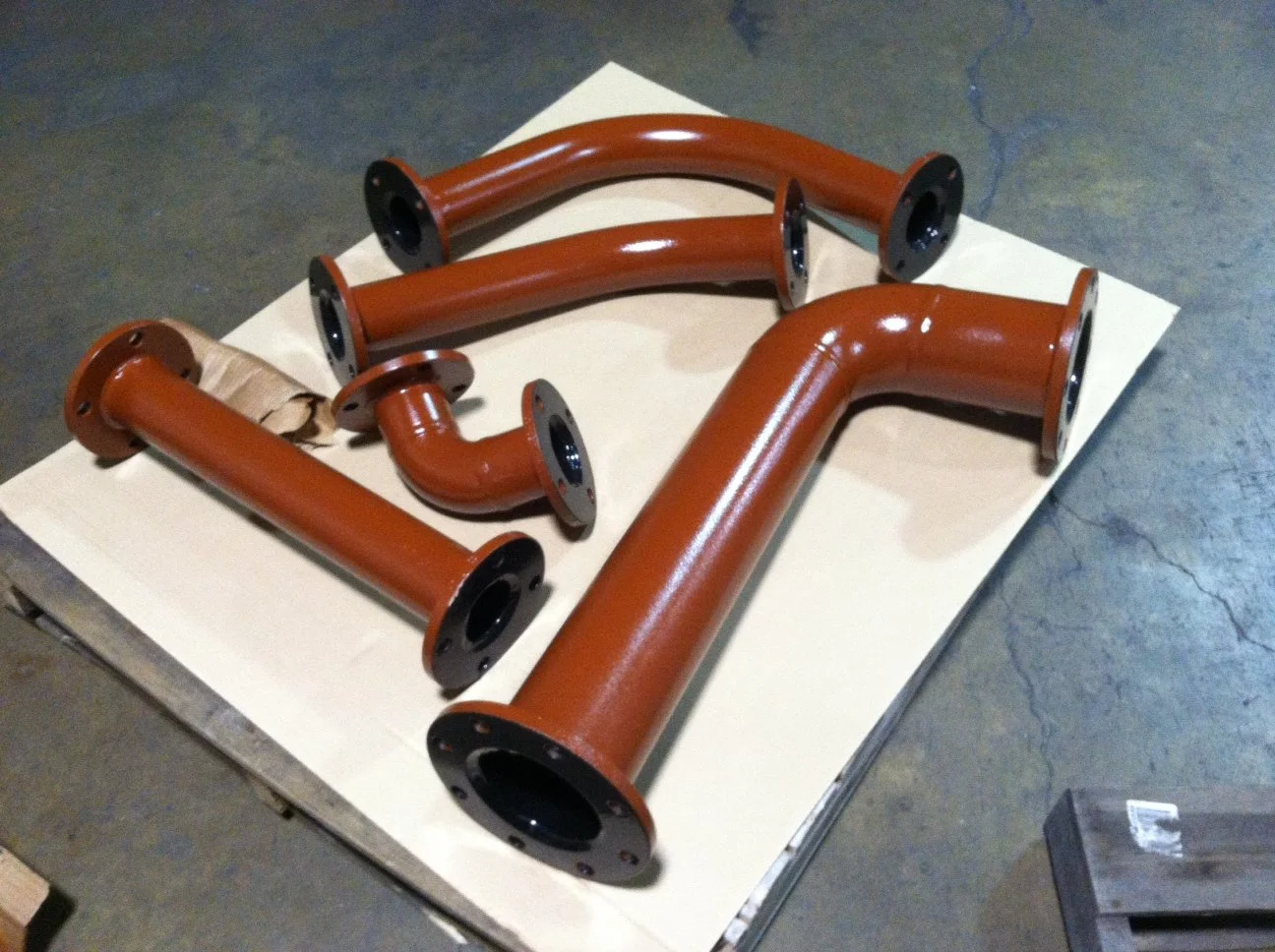
We apply polyethylene powder (random ethylene copolymers from IFS Coatings) to metal parts, including pipe ID (inside diameter) linings and flanges. Other polyethylene-coated parts we have run include stainless steel mixing balls, where the soft polyethylene lets them mix in delicate glass vials, and battery hold-downs. Small polyethylene parts can also be fully encapsulated with Minicoat. Send the print with the polyethylene product and thickness, and we will quote it.
Thick-film epoxy dip coating for busbars
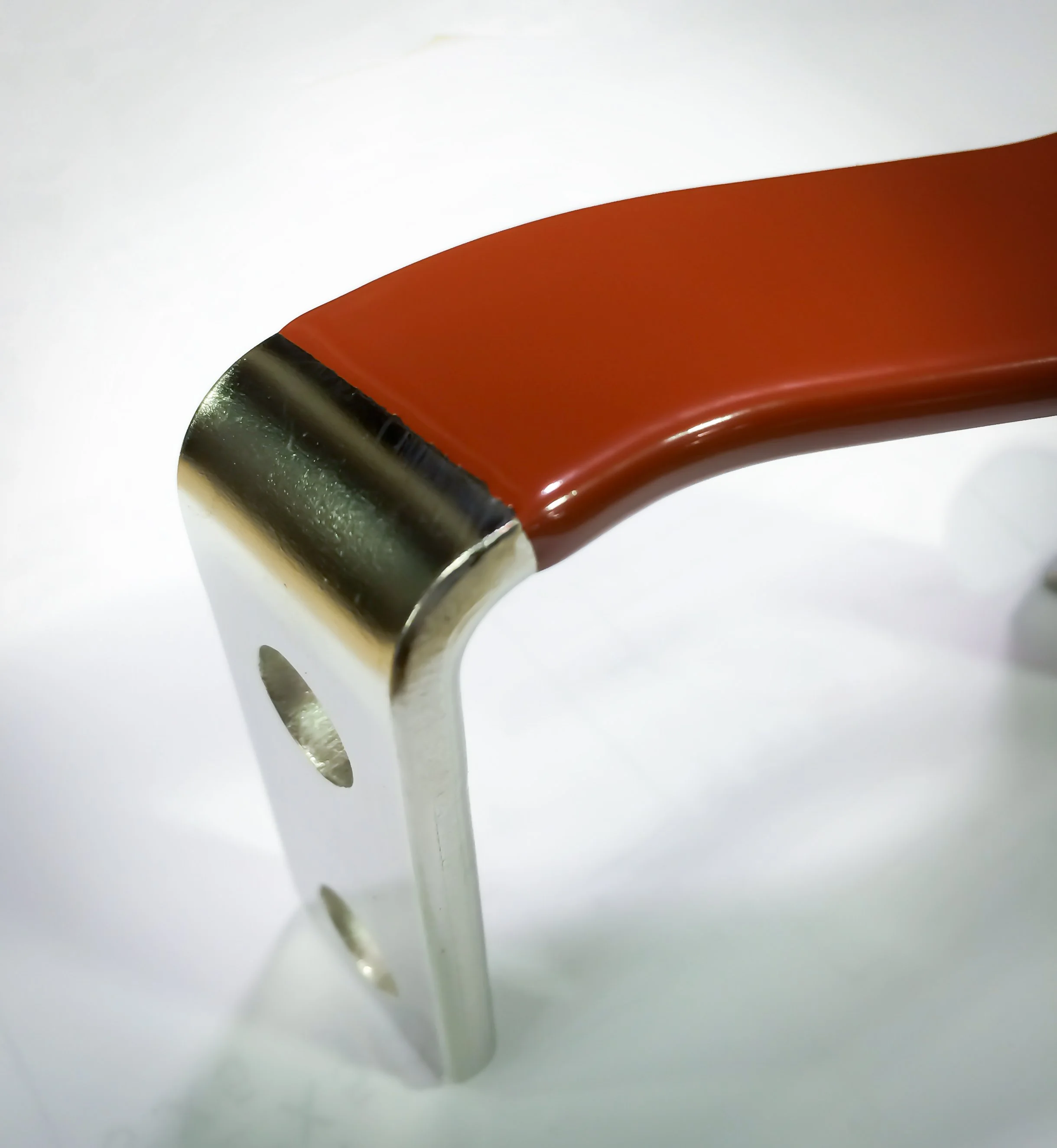
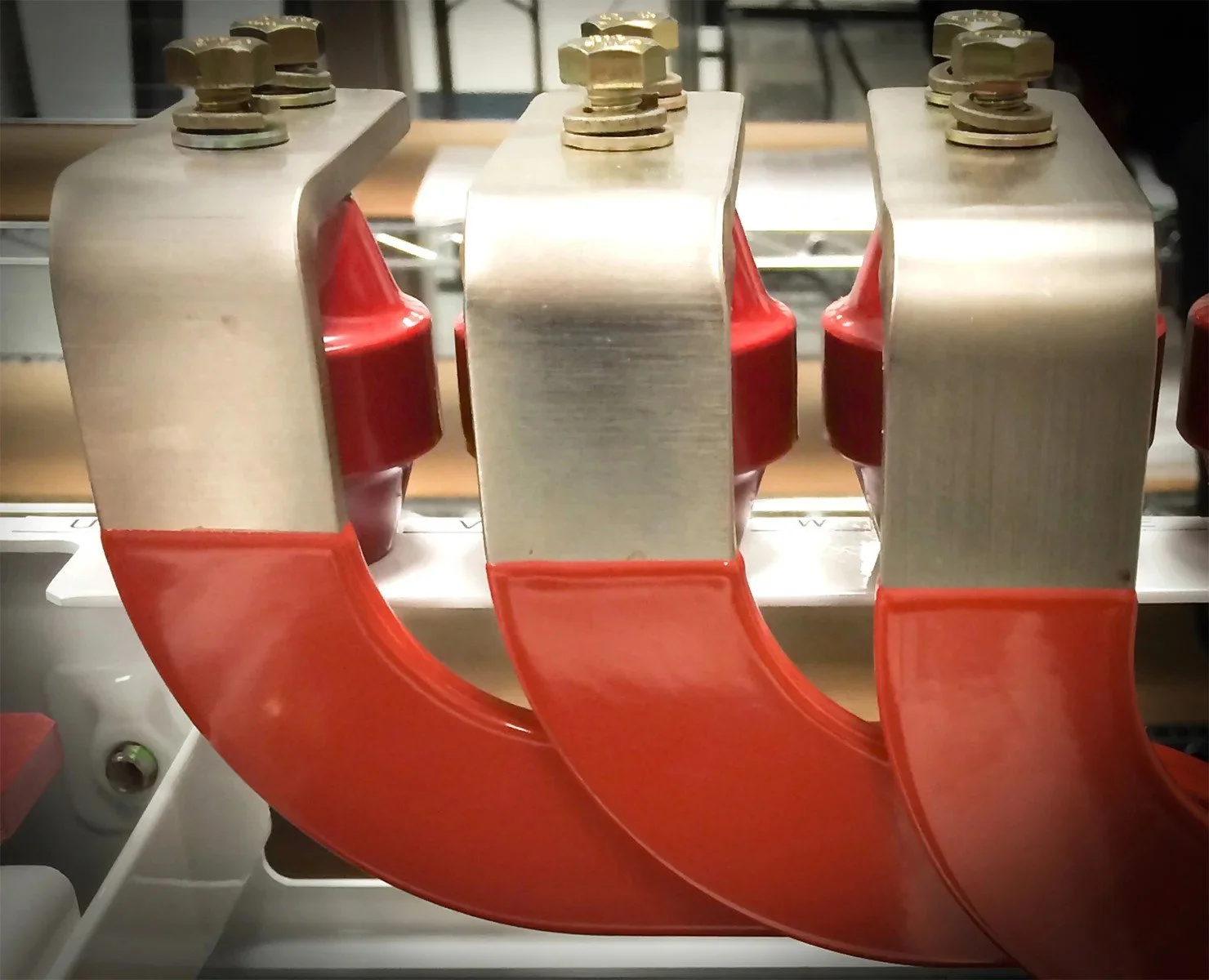
For busbars and electrical insulation, we use epoxy. Thick-film epoxy dip is our standard process for copper and aluminum busbars and switchgear: high dielectric-strength, electrical-grade fluid bed epoxy powder, typically .012" to .020" (0.3 to 0.5 mm) thick. Customers usually specify the test voltage they need, and we hipot test after coating when required. A typical example is AC 3,700 V at 50/60 Hz for 1 minute.
We stock red electrical-grade epoxies from AkzoNobel and apply 3M Scotchcast 260 when the print calls for it. If your print names an epoxy we don't stock, the quote includes purchasing it. Edges matter more than thickness, so specify a radiused edge wherever coating is applied. Writing the spec? Read How Thick Does Busbar Epoxy Really Need to Be? and see Epoxy Dip Coating for Busbars.
Part size and weight limits
Our fluid bed handles parts weighing up to 75 lbs. ES spray handles longer parts, up to 5 ft. Small parts in high volume go to Minicoat, up to 9 x 4 x 2 inches.
Typical applications
Automotive clips and clamps, wiring-harness brackets, seat springs, and glove-box and door strikers (nylon)
Drive and steering splines, drive shafts and yokes (nylon)
Stainless steel and aluminum brackets for medical sterilization cases, coated in Rilsan nylon 11. For some of this work the end customer autoclave-tests the finished brackets to 200 hours; Fusion does not run that test.
Pipe ID linings and flanges, in nylon or polyethylene as requested
Copper and aluminum busbars and switchgear (epoxy)
Motor stators, coated to the customer's spec, mostly by fluid bed with the bore masked
Stainless steel mixing balls (polyethylene)
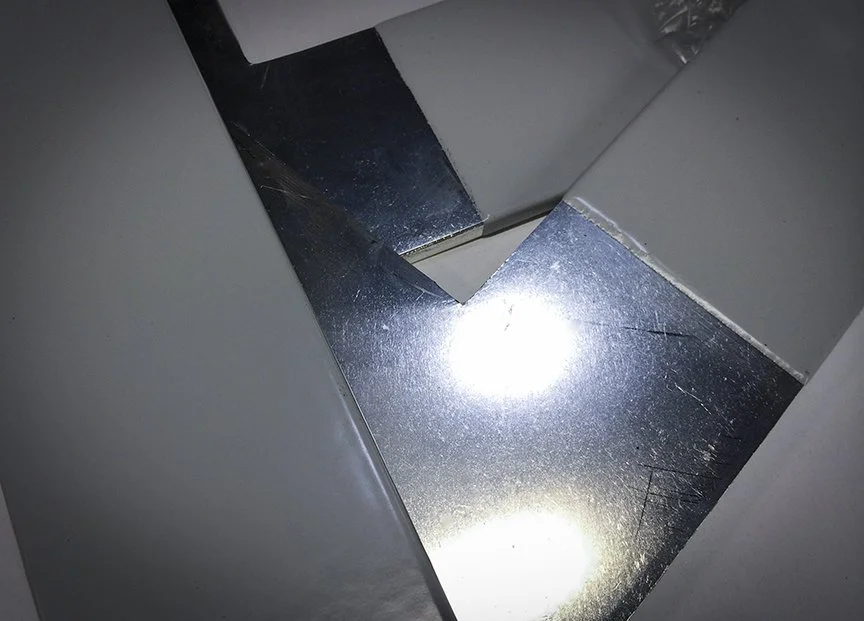
Need coating only where it counts? Selective coating applies nylon, polyethylene or epoxy to specific areas and leaves bare metal for fastening or grounding.
Quality and specifications
Fusion Coatings, Inc. is ISO 9001:2015 certified. We can certify to 26 OEM coating specifications on request: 9 Ford, 8 Stellantis and 9 GM. For nylon, we currently certify to GM GMW15645 Type IV, can certify to Type III when the print calls it out, and coat nylon to Ford WSS-M4D240-A2. See the full list on our Specifications page.
We are a job shop. We don't design or make parts. You send the print and the coating spec, and we coat to them.
Small runs and quoting
Small-run orders in nylon, polyethylene and thick-film epoxy are always considered and quoted. A small order today can grow into a production program, so we treat it that way. There is no minimum order, and lead time is about 2 weeks, depending on the part, quantity and coating.
To get a quote, send the part print, the coating specification (product and thickness), the quantities and, for busbars, any hipot test voltage.
Call 610.693.5886 (Monday to Thursday, 6:00 a.m. to 4:00 p.m.), email pjones@fusioncoatingsinc.com, or use the contact form.
Fusion Coatings, Inc., 932 W Penn Ave, Robesonia, PA 19551.
Frequently asked questions
What is fluidized bed coating?
Fluidized bed coating, also called fluid bed dip coating, is a way to put a thick, even plastic film on a metal part. The part is preheated in an oven hot enough to melt the coating powder, then dipped into powder that air keeps moving like a liquid. The powder melts on the hot metal and forms a continuous coating.
Which coatings does Fusion apply by fluid bed dip?
Fusion fluid bed dip coats in Rilsan nylon 11 and other nylon 11 and nylon 12 powders, in polyethylene, and in thick-film electrical-grade epoxy. Nylon is the core of our work. We coat to the product and thickness on your print.
Should I specify fluid bed dip or ES spray for nylon?
Fluid bed dip nylon is typically .008" to .020" (0.2 to 0.5 mm) thick and handles parts up to 75 lbs. Electrostatic (ES) spray nylon is typically .004" to .006" (0.1 to 0.15 mm) and handles parts up to 5 ft. The design engineer sets the thickness on the print, and we coat to it.
Can you epoxy dip coat busbars?
Yes. Thick-film epoxy dip is our standard busbar process, typically .012" to .020" (0.3 to 0.5 mm) of electrical-grade epoxy on copper and aluminum busbars. We hipot test after coating when the customer requires it. Specify a radiused edge wherever coating is applied, because coating pulls thin on sharp edges.
What is the heaviest part you can fluid bed coat?
Our fluid bed handles parts weighing up to 75 lbs. Send your print and we will confirm the part fits.
Is there a minimum order for dip coating?
No. We have no minimum order, and small runs in nylon, polyethylene and thick-film epoxy are always considered and quoted. Lead time is about 2 weeks, depending on the part, quantity and coating.